
Charter jets Tampa guide
Charter jets Tampa gives you a flexible way to fly on your schedule. A light jet typically cruises at 430 knots, covering regional hops in under an hour. This guide covers pricing, airports, routes, and seasonal flying considerations.

Aircraft classes for Tampa charter
Light jets are the workhorse for Tampa charter flights thanks to their balance of range and operating cost. With typical range around 1,400 nautical miles, they cover most of the eastern U.S. and the Caribbean. Midsize jets offer more cabin space for seven to nine passengers and extend range to about 2,100 nautical miles, while super-midsize and heavy jets handle transcontinental trips with 8 to 14 passengers.
When you charter a private jet to or from Tampa for a longer trip, like Los Angeles or Seattle, a super-midsize or heavy jet is often the better match. Turboprops suit short hops to nearby Florida cities where runway length or operating cost matters more than speed. We'll help you match the aircraft to your passenger count, luggage, and route so the cabin fits the day you have planned.
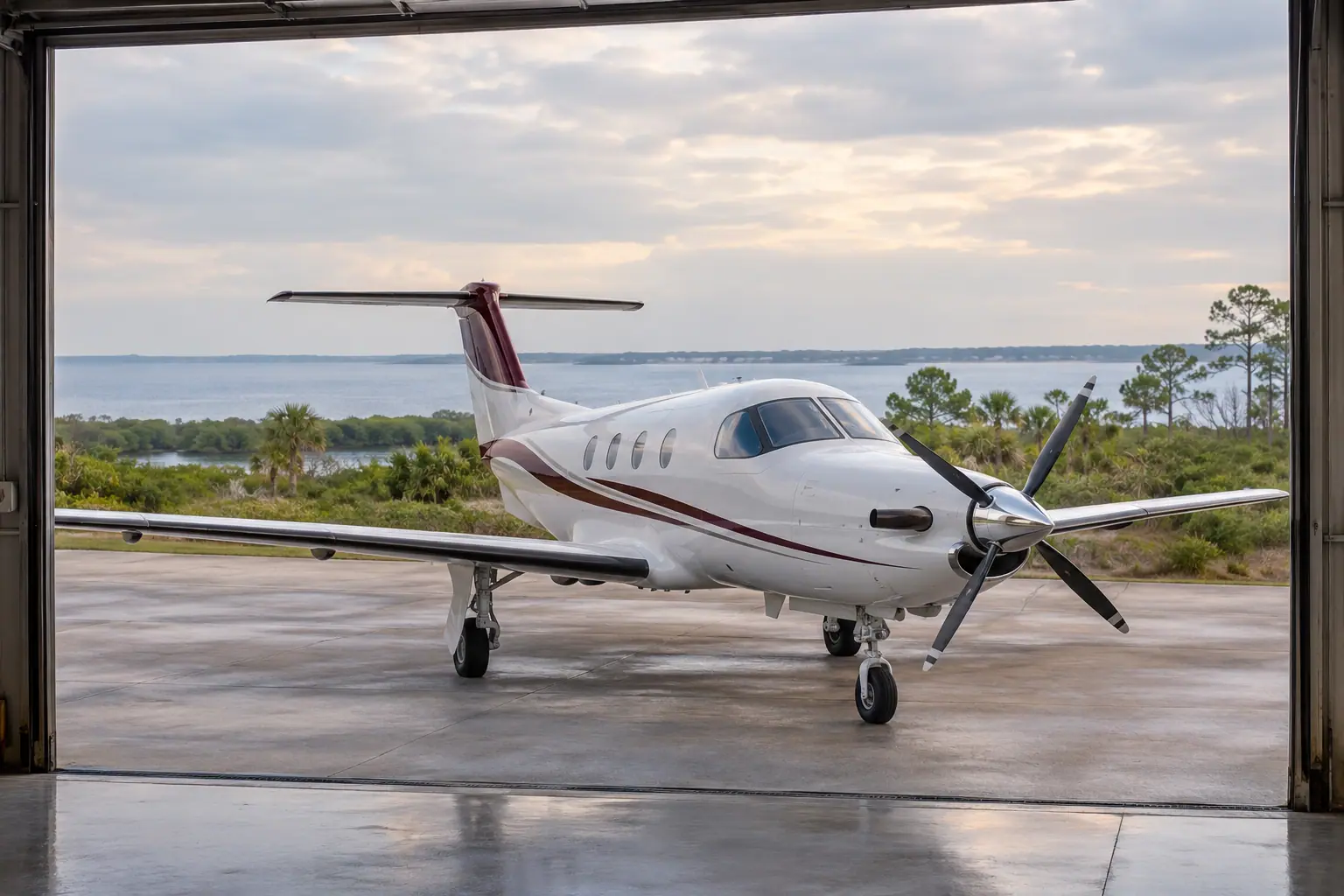
Turboprop
- 6-8 seats
- 300 kt cruise
- 1,500 nm range
Pilatus PC-12 NGX, Daher TBM 960
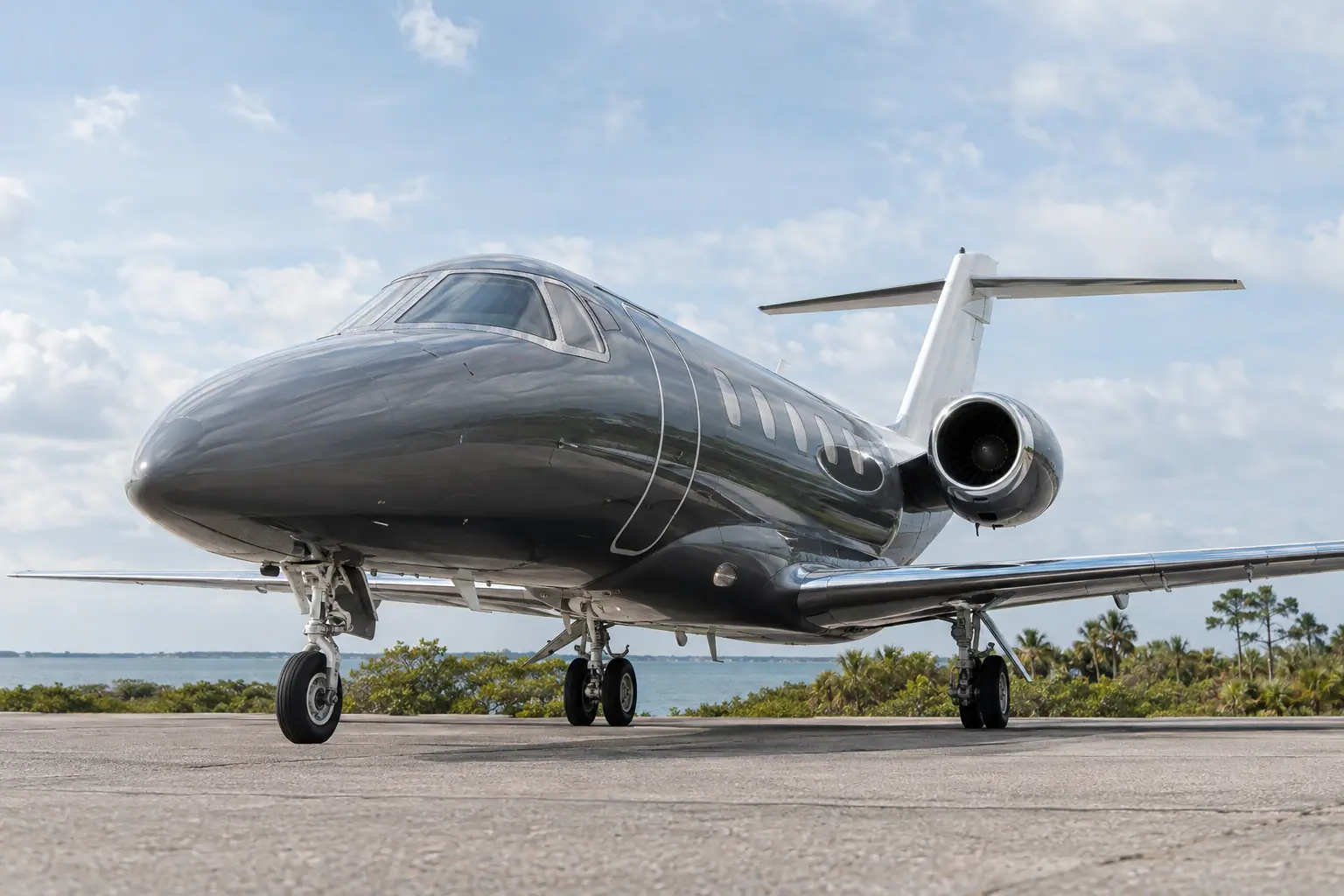
Light jet
- 4-7 seats
- 430 kt cruise
- 1,400 nm range
Embraer Phenom 300E, Pilatus PC-24
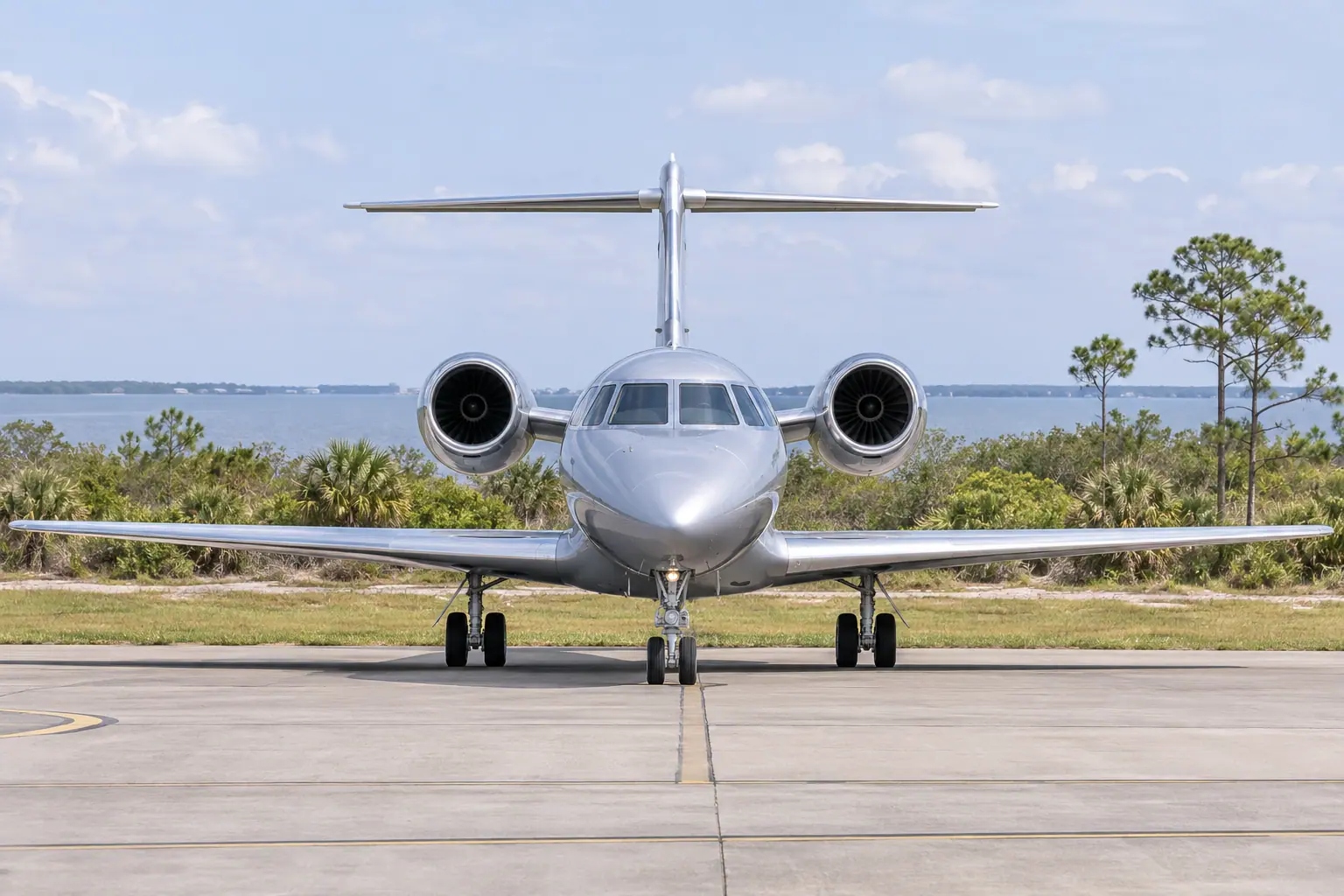
Midsize jet
- 7-9 seats
- 440 kt cruise
- 2,100 nm range
Cessna Citation XLS+, Cessna Citation Latitude
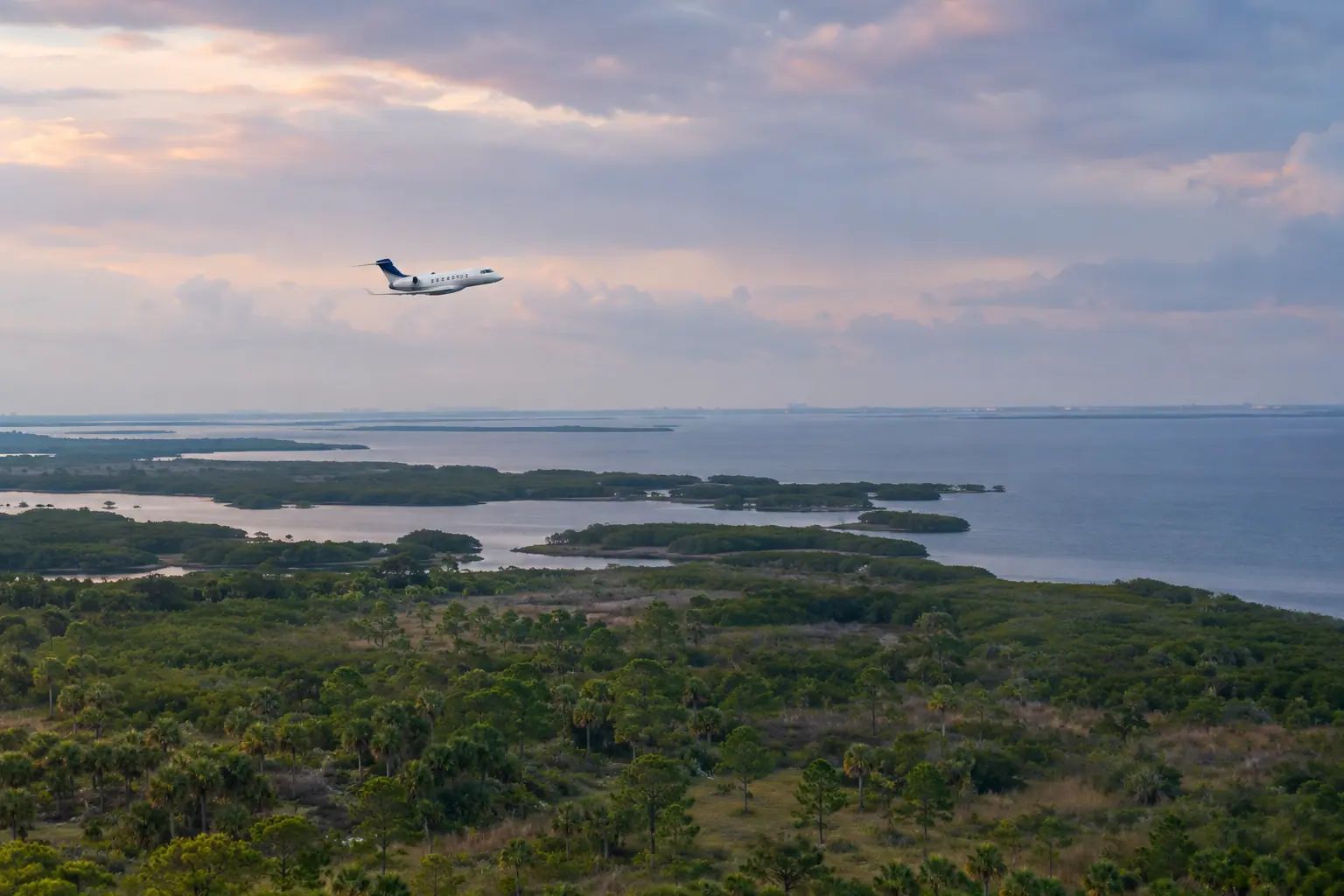
Super-midsize jet
- 8-10 seats
- 470 kt cruise
- 3,200 nm range
Cessna Citation X+, Bombardier Challenger 350

Heavy jet
- 10-14 seats
- 470 kt cruise
- 4,000 nm range
Dassault Falcon 900LX, Gulfstream G450
Tampa heat and storm season
Summer heat in Tampa raises density altitude, which affects takeoff performance for charter jets. In July, the average high is 88°F and density altitude reaches about 2,000 feet at Tampa International, even though the field elevation is just 26 feet. At the peak of 115°F, density altitude can climb to 2,500 feet. This matters for smaller aircraft and long-range departures: if density altitude is high, then the aircraft may need a longer runway or a weight restriction to operate safely.
The wet season from June through September brings frequent afternoon thunderstorms that can delay or reroute flights. July averages 26 wet days, and August 25, so build some flexibility into your schedule. When storms pop up, then your operator may adjust the route or departure time to keep the flight safe. Winter and spring are drier and more predictable, with January and February averaging 7 wet days each.

| Month | Avg high | Rainy days | KTPA DA | KPIE DA | KVDF DA |
|---|---|---|---|---|---|
| Jan | 69°F | 7 | 700 ft | 700 ft | 700 ft |
| Feb | 74°F | 7 | 1,000 ft | 1,000 ft | 1,000 ft |
| Mar | 78°F | 6 | 1,300 ft | 1,300 ft | 1,300 ft |
| Apr | 83°F | 9 | 1,600 ft | 1,600 ft | 1,600 ft |
| May | 87°F | 11 | 1,900 ft | 1,900 ft | 1,900 ft |
| Jun | 87°F | 22 | 1,900 ft | 1,900 ft | 1,900 ft |
| Jul | 88°F | 26 | 2,000 ft | 1,900 ft | 2,000 ft |
| Aug | 88°F | 25 | 2,000 ft | 1,900 ft | 2,000 ft |
| Sep | 86°F | 20 | 1,800 ft | 1,800 ft | 1,800 ft |
| Oct | 83°F | 9 | 1,600 ft | 1,600 ft | 1,600 ft |
| Nov | 78°F | 6 | 1,300 ft | 1,300 ft | 1,300 ft |
| Dec | 74°F | 6 | 1,000 ft | 1,000 ft | 1,000 ft |
Wet days: days with at least 1 mm of precipitation. Density altitude calculated at average afternoon high using a rule-of-thumb formula. Operators apply their own performance figures.

Seasonal peaks and event travel to Tampa
Tampa's busiest charter periods line up with major events and winter escapes from colder climates. The Gasparilla Pirate Festival in late January and February's spring-training games bring a surge in demand, and winter months see more visitors from the Northeast and Midwest. Booking several weeks ahead helps secure the aircraft you want, especially for light and midsize jets.
If your travel dates overlap a major event, then expect higher rates and tighter availability on charter jets Tampa-wide. We recommend locking in your quote early and being flexible on departure times. Off-peak periods, like late spring and early fall, often offer more aircraft choices and better pricing on empty legs.
Common routes from Tampa
The busiest charter routes from Tampa connect to New York and Chicago with light jet times of about 2 hours 27 minutes and 2 hours 25 minutes respectively. Nonstop distance to New York is 878 nautical miles, and to Chicago 868. These are popular for business travel and weekend trips where commercial schedules add hours on the ground.
International legs to Nassau and Turks and Caicos are short hops at 324 and 671 nautical miles, typically under two hours in a light jet. For longer trips, Los Angeles is 1,876 nautical miles and about 5 hours 38 minutes, while Seattle stretches to 2,188 nautical miles and 6 hours 24 minutes. If your trip crosses a border, then plan for CBP clearance at your arrival airport, and confirm passport and customs details with us before booking.

- Miami → Tampa0h 43m
- New York → Tampa2h 27m
- Los Angeles → Tampa5h 38m
- Chicago → Tampa2h 25m
- Dallas → Tampa2h 15m
- Houston → Tampa1h 57m
- Atlanta → Tampa1h 12m
- Washington, DC → Tampa2h 01m
- Boston → Tampa2h 49m
- Philadelphia → Tampa2h 18m
- Denver → Tampa4h 15m
- Phoenix → Tampa4h 51m
- San Francisco → Tampa6h 07m
- Seattle → Tampa6h 24m
- Las Vegas → Tampa5h 15m
- Nashville → Tampa1h 36m
- Tampa → New York2h 27m
- Tampa → Los Angeles5h 38m
- Tampa → Aspen4h 26m
- Tampa → Nassau1h 05m
- Tampa → Cabo San Lucas4h 42m
- Tampa → Turks and Caicos1h 56m
- Tampa → The Hamptons2h 34m
- Tampa → Jackson Hole5h 05m

Airports serving charter jets in Tampa
Tampa International is the primary gateway for charter jets Tampa travelers use, with two FBOs and an 11,002-foot runway. It sits 26 feet above sea level and handles the widest range of aircraft. The other two airports serve specific needs: St. Petersburg Clearwater is closer to the beaches, and Tampa Executive is a smaller field for light aircraft. Your choice affects drive time and aircraft options, so we'll confirm which airport fits your itinerary.
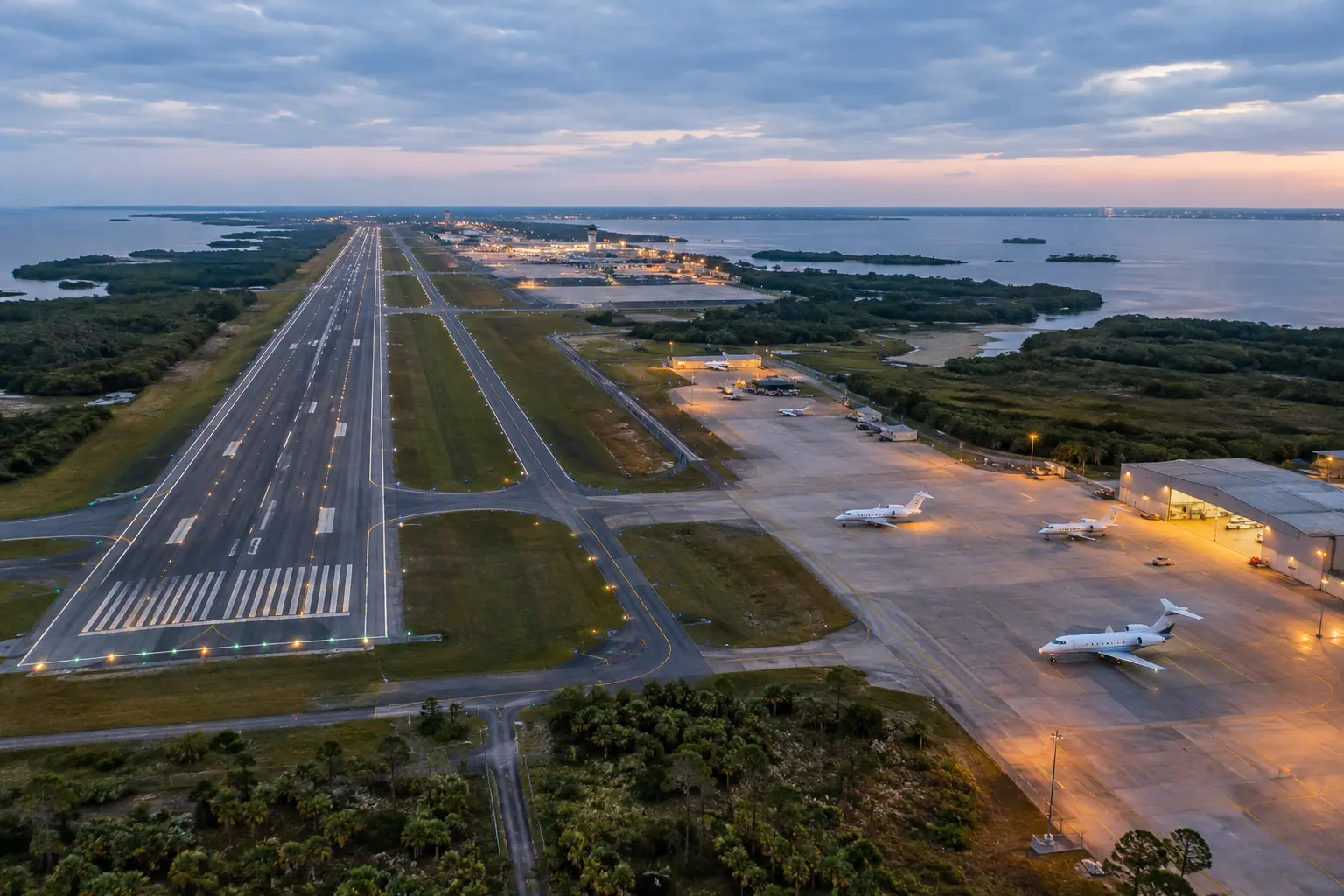
Tampa International Airport
- KTPA code
- 11,002 ft runway
- 5 mi to Downtown Tampa
Tampa International Airport (TPA) is the main commercial and private aviation hub on the Tampa side of the bay. With an 11,002-foot runway and FBOs including Sheltair and Signature Aviation, it accommodates everything from light jets to heavy jets. The field elevation is 26 feet. For charter jets Tampa departures, TPA offers the most scheduling flexibility and the widest choice of aircraft, though it can be busy during peak travel periods. Ground transportation to downtown Tampa and the beaches is straightforward.
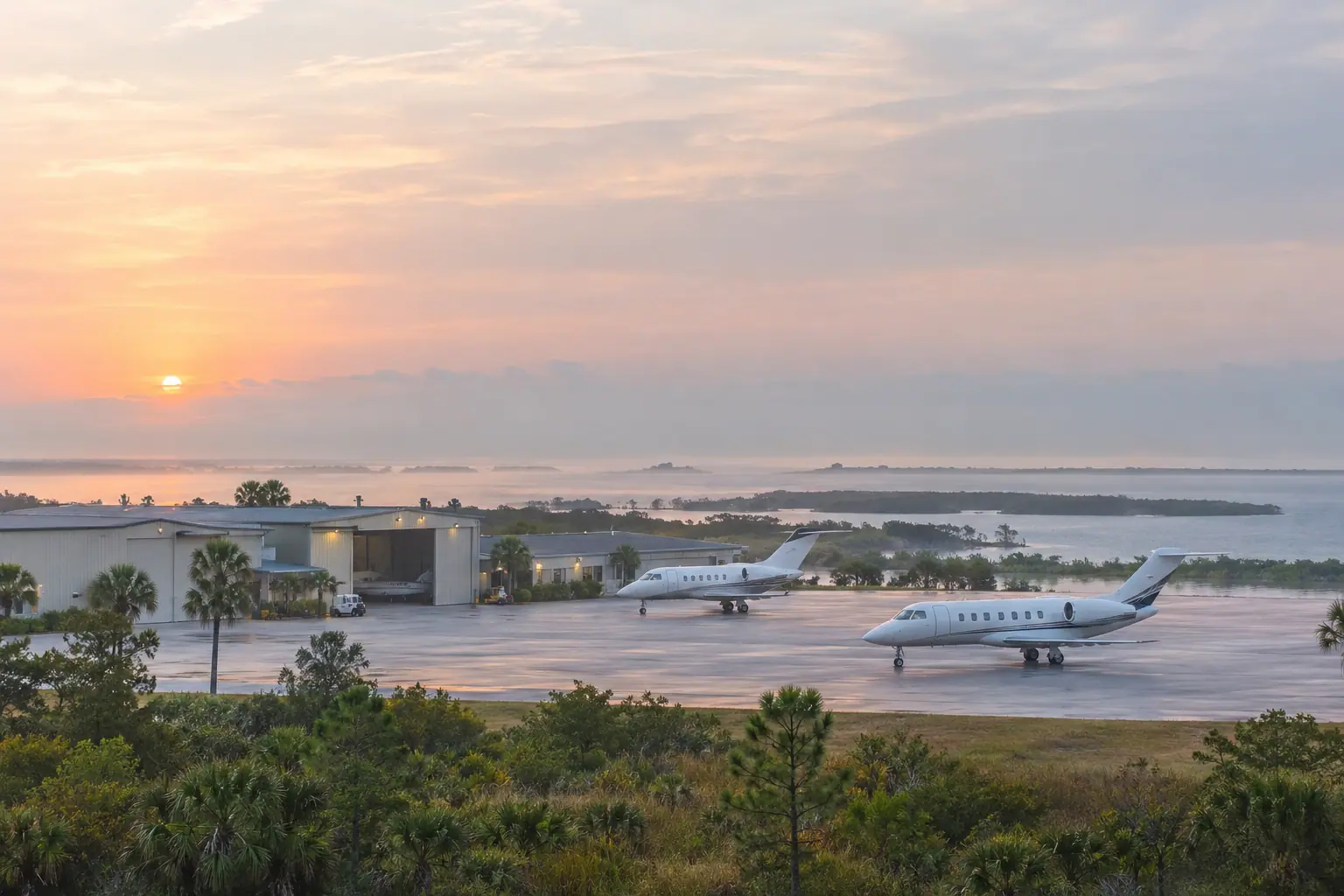
St. Petersburg Clearwater International Airport
- KPIE code
- 9,730 ft runway
- 14 mi to Downtown Tampa
St. Petersburg Clearwater International Airport (PIE) sits 11 feet above sea level with a 9,730-foot runway, making it a practical alternative for travelers staying on the Pinellas County side. It's often a shorter drive to Clearwater and St. Pete beaches than TPA. While it has fewer on-site FBO options, many charter operators use PIE for both domestic and international legs. Confirm with us which FBO your flight will use so you know exactly where to go.
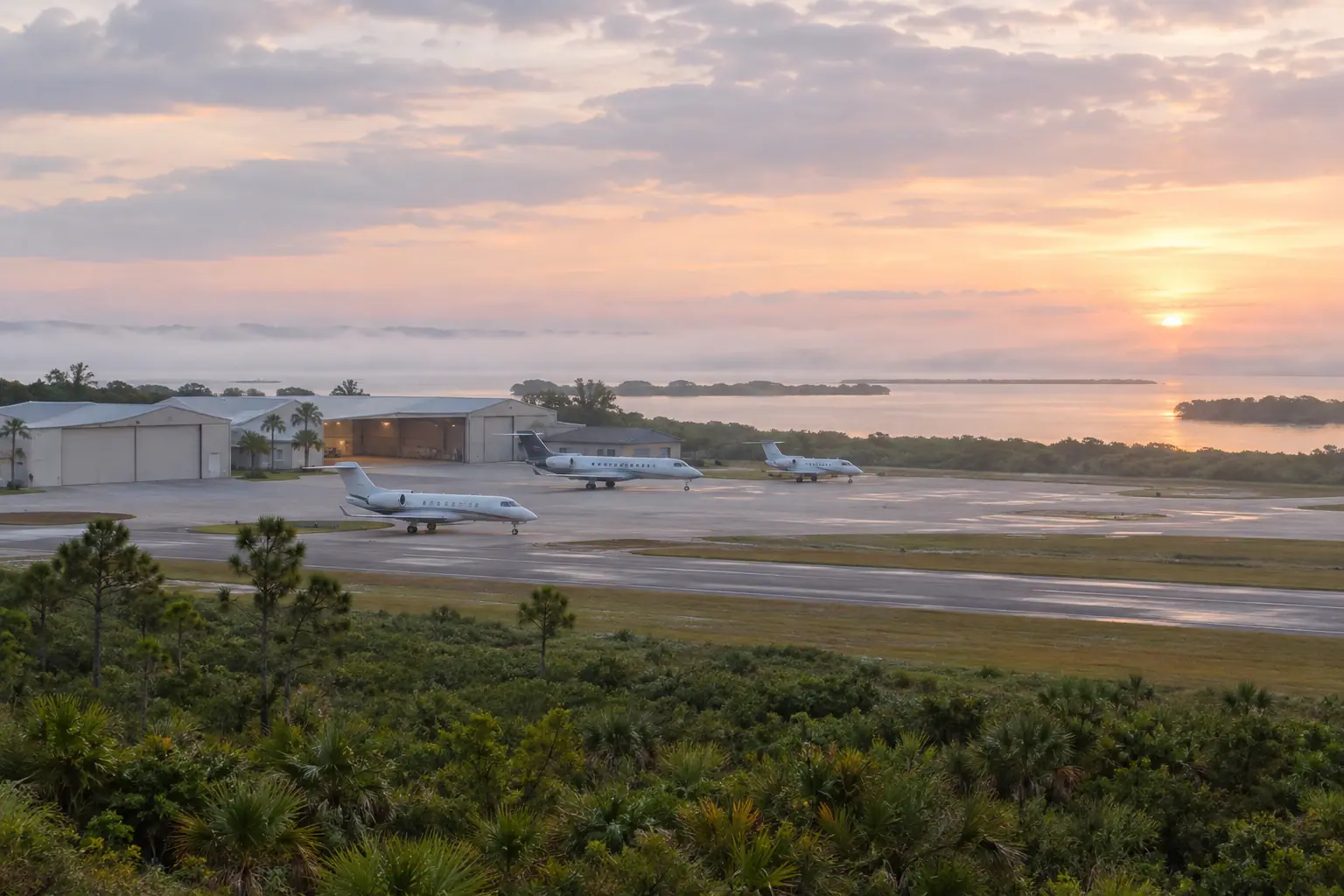
Tampa Executive Airport
- KVDF code
- 5,000 ft runway
- 8 mi to Downtown Tampa
Tampa Executive Airport (VDF) is a smaller general aviation field with a 5,000-foot runway and an elevation of 22 feet. It primarily serves light aircraft and turboprops, so it's a good fit for short regional hops where a smaller airport saves time on the ground. It's less suited to larger jets or long-range flights. If your itinerary involves a light jet to a nearby Florida city, VDF can be a convenient departure point.
What charter jets Tampa cost in 2026
Charter jets Tampa pricing begins with hourly rates that vary by aircraft class. A light jet in Tampa runs $3,800 to $5,800 per hour for four to seven passengers, making it a common choice for regional and short-haul flights. Turboprops start lower, from $2,200 to $3,500 per hour, while heavy jets for 10 to 14 passengers range from $9,500 to $14,500 per hour. These are estimates; your quote depends on the specific aircraft, crew, and itinerary.
For a Tampa to New York flight, expect $9,500 to $14,000 in a light jet, based on 878 nautical miles and about 2 hours 27 minutes of flying. Shorter legs like Miami to Tampa start around $4,000. If your schedule is flexible, empty legs out of Tampa can reduce the cost of a one-way trip substantially, though availability is unpredictable. We arrange flights through FAA Part 135 operators and act as your agent under DOT Part 295 rules, so you have a single point of contact for the quote and the day of travel.

| Class | Seats | Hourly estimate | Miami → Tampa |
|---|---|---|---|
| Turboprop | 6-8 | $2,200–$3,500 | $2,000–$3,500 |
| Light jet | 4-7 | $3,800–$5,800 | $4,000–$6,000 |
| Midsize jet | 7-9 | $5,200–$7,800 | $5,000–$8,000 |
| Super-midsize jet | 8-10 | $7,200–$10,000 | $7,000–$10,000 |
| Heavy jet | 10-14 | $9,500–$14,500 | $9,500–$14,500 |

How we arrange charter jets Tampa
Share your trip details
Tell us your dates, passenger count, and preferred airports. We'll ask about luggage and any special needs so the aircraft we suggest fits the mission.
Compare aircraft and quotes
We'll send options from FAA Part 135 operators, with clear pricing and aircraft details. You'll see hourly rates and total estimates so you can compare fairly.
Confirm and coordinate
Once you choose, we handle the booking and share FBO details, crew info, and any customs requirements. You'll know exactly where to go and when.
Fly and follow up
On the day, the operator manages the flight under its Part 135 certificate. We stay available for schedule changes and follow up after your trip.
Common questions
How much does it cost to charter jets Tampa to New York?
For a light jet, expect $9,500 to $14,000 for the 878-nautical-mile trip, which takes about 2 hours 27 minutes. Pricing varies with aircraft, date, and availability, and these are estimates. A midsize or super-midsize jet will cost more but offers more cabin space and range. We can provide a firm quote once we know your dates and passenger count.
Which airports serve private charter jets in Tampa?
Tampa International (KTPA) is the main option, with an 11,002-foot runway and two FBOs. St. Petersburg Clearwater (KPIE) has a 9,730-foot runway and is often closer to Pinellas beaches. Tampa Executive (KVDF) has a 5,000-foot runway and suits light aircraft. We'll recommend the best airport based on your destination and ground plans.
How far in advance should I book a private jet flight to or from Tampa?
Aim for at least a few days to a week for typical trips, but during peak periods like Gasparilla or spring training, book several weeks ahead. July and August bring frequent afternoon storms with 26 and 25 wet days respectively, so build in some flexibility. Last-minute bookings are possible, but aircraft choice may be limited.
What is density altitude and why does it matter for Tampa flights?
Density altitude is the altitude the aircraft 'feels' based on temperature and pressure. In Tampa, July density altitude averages about 2,000 feet, and at 115°F it can reach 2,500 feet. High density altitude reduces engine and lift performance, so operators may need a longer runway or impose weight limits, especially on hot summer afternoons.
Can I book an international charter from Tampa?
Yes, popular routes include Nassau (324 nautical miles, about 1 hour 5 minutes) and Turks and Caicos (671 nautical miles, about 1 hour 56 minutes). International flights require CBP clearance, and we'll confirm passport and customs details with you. Operators handle the filing, and we'll make sure you know what to expect on arrival.
What is the typical flight time from Tampa to Los Angeles?
A light jet takes about 5 hours 38 minutes for the 1,876-nautical-mile trip. That's a long leg for a light jet, so a super-midsize or heavy jet may be more comfortable and better suited to the range. We can compare options and pricing for your specific date.